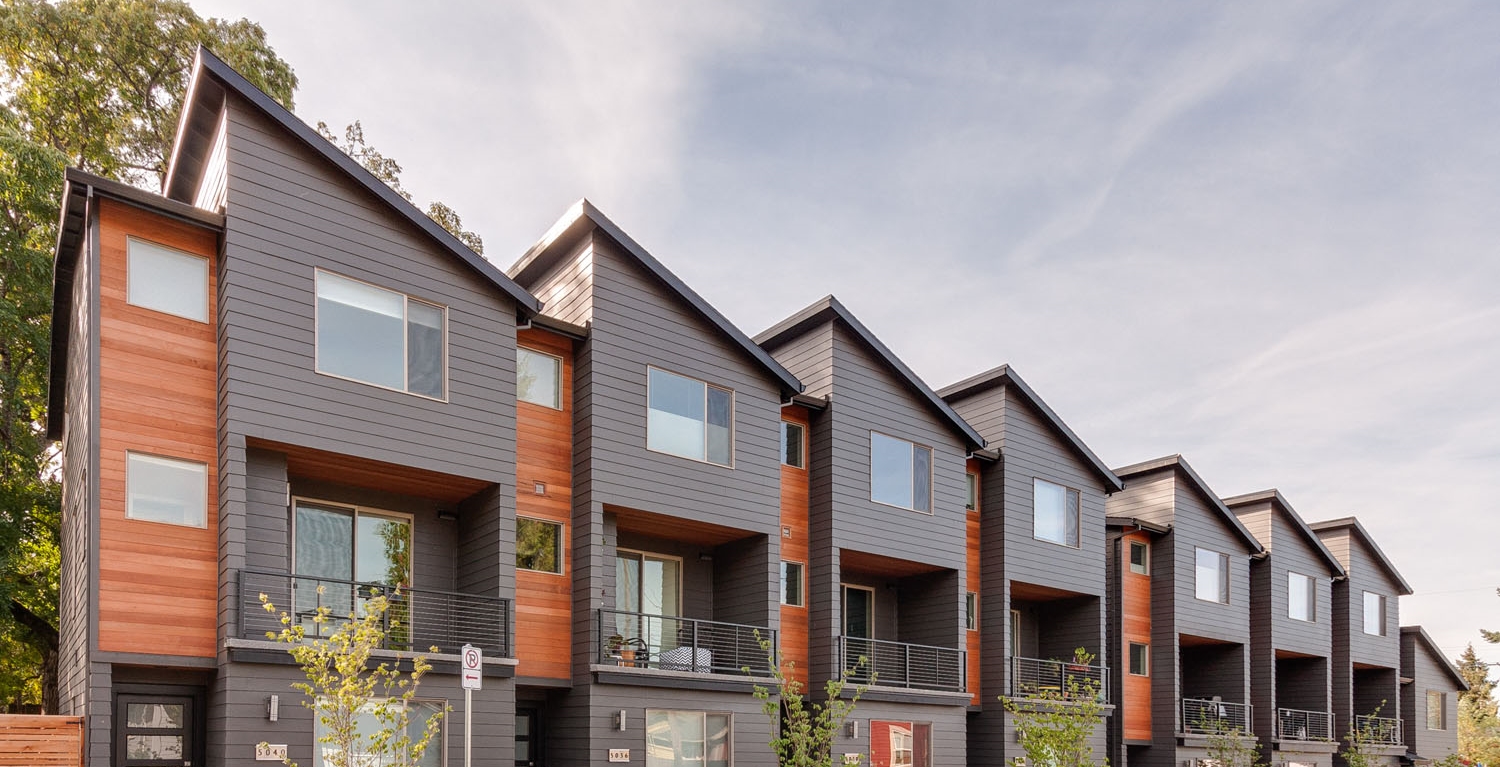
Buying a Townhouse in Seattle
Thinking of buying a new construction townhome? Read this first!
This guide is written by Matt Goyer, a real estate broker and publisher of Urban Living, and is based on his 20 years of real estate experience. Matt has helped a number of buyers buy new townhomes. We wanted to give you an overview of what it takes to buy a new townhome in the Seattle area, and this guide will also give you a good sense of what it is like to work with us. Do you still have questions? Reach us at hello@urbnlivn.com.
Why a townhome
Finding townhomes
Finding townhomes not on the MLS
Why use a buyer's agent
Seeing townhomes in person
Builder quality -- get an inspection
Warranties vary
Builder's addendum, understand it
Before your warranty is up, re-inspect
Pros and Cons of Buying a Townhouse in Seattle
There’s a lot of love about a brand-new townhome:
- Move-in ready
- No lawn to mow
- Minimal maintenance
- No HOAs (usually)
- No bidding wars (usually)
Heads up though:
- Stairs: They usually have three flights of stairs so you’ll be able to skip the Stairmaster at the gym
- Appliances: A washer/dryer is often not included. Some builders don’t include the fridge either.
- Not perfect: Like anything built by humans, there’s a break-in period and the home won’t be “perfect.”
- Sewer capacity charge: All developers pass on the city’s fee to connect the townhome to the sewer. Budget $75/month for this.
- Window coverings: You will want window coverings, they’re never included so be sure to budget $2,500-$10,000+ for them.
- Shower rods: usually you’ll need to purchase your own. What you see is likely the stager’s
- Fiber: CenturyLink Fiber requires an external power outlet where it comes into your home and the builder may not have put one next to the fiber conduit.
Where to Find Seattle Townhouses for Sale
We highly recommend that you use a NWMLS-powered site or app to search your search in buying a townhouse in Seattle. Wait, what is the NWMLS? The Northwest Multiple Listing Service (NWMLS) is an organization of Seattle area real estate agents who agree to work together to better assist their clients. Real estate sites that get their list of homes for sale from the NWMLS have the most up-to-date information on what is for sale and what has sold.
Universal home-buying tip: No matter where you’re house hunting, look for a site (or app) that’s powered directly by the local MLS. In the fast-moving world of real estate, you don’t want to waste time lusting after homes that may have already been sold!
In the Seattle area, examples of NWMLS-powered real estate sites (or apps) are Redfin, Estately, Windermere, and John L Scott. We highly recommend Redfin because we feel it is the easiest to use, has the most features, and is available on the web, iPhone, and Android. We’re also biased because Matt spent seven years working at Redfin.
What about Zillow, Trulia, or Realtor.com? These sites do not receive their home listings directly from the NWMLS, so we recommend against using them. Their listings come instead from individual agents and their brokerages, who may not have the resources to provide the most up-to-date information or remove listings as soon as a home goes off the market.
If you decide to use Redfin, here are a few tips to get the most out of your experience in buying a townhouse in Seattle:
- Create an account: This allows you to “Favorite” homes so you can keep track of what you like. You can also share your list of favorites with us!
- Keep tabs on the market: Get a jump on the competition by signing up for Instant Alerts. You’ll receive a notification as soon as a new home comes on the market.
- House hunt on the go: Download the Redfin app for iPhone or Android, so you can keep searching wherever you go.
- Do your research: One great way to understand what to expect in your own search is to look at sold homes. Note how much lower or higher the sale price is from the list price and how long a home was on the market. Look for trends among the types of homes and in the areas you are interested in.
Here are a few other home search tips:
- Google Street View: Check out the area and see what the homes of your potential neighbors look like.
- Walk Score: See how many restaurants, bars, and shops are within walking distance of a home you’re considering.
- Seattle In Progress: See what has been permitted nearby in case you’re worried someone might block your view.
Finding Seattle townhouses not on the MLS
If you’ve searched the MLS and still haven’t found what you’re looking for, there are a few more venues to check when buying a townhouse in Seattle:
- Blueprint Capital: Seattle’s leading real estate investment trust lists all the projects they’ve funded. Many of them are townhomes under construction but not yet for sale, but it will give you an idea of what’s going to be available in the future.
- Seattle in Progress: As mentioned above, this site will show townhome projects that have applied for or been approved for a building permit
- Listing agents: We’re happy to reach out to our network of listing agents who represent new construction townhomes and see what they have coming up.
- Drive-bys: Hop in the car and through the neighborhoods you’re interested in. Make note of any projects under construction, and use King County records to figure out who owns them and what their plans are.
Why use a buyer’s agent for buying a townhouse in Seattle?
Don’t be lured into using the listing agent or the agent sitting at the open house if you’re thinking of buying a new construction townhouse. The listing agent represents the seller, and the open house agent is likely going to kick back some commission to the listing agent. What you want is a buyer’s agent dedicated to representing your interests.
Here are some examples of where a buyer’s agent will add value:
- Strong offer: It is rare, but sometimes possible to negotiate an offer below list price. What’s more common is that we’re able to negotiate a closing credit, but only if the developer is motivated to sell. Some of these developers are very patient and are happy to wait for a full-price offer with no concessions.
- Inspection: We highly recommend negotiating an inspection contingency, inspecting the property, and ensuring the developer addresses the issues prior to closing.
- Post-close: A good buyer’s agent will stay engaged and help you with any issues post-closing.
Seeing Seattle townhomes in person
We’ve toured hundreds of townhomes in Seattle and have seen a few issues come up over and over again. Here’s the official list of Urban Living townhouse pet peeves. Use this as a checklist as you tour townhomes to ensure you don’t regret something after buying a townhouse in Seattle.
Annoying, but livable
Outlet placement: I’ve seen too many kitchens where the outlets aren’t horizontally aligned. That is just sloppy. But equally frustrating is when outlets are placed every 6 feet according to code, but no thought is given to the fact the default spacing might not make sense for, say, bedside tables. Or they’re not centered under windows.
The fridge doesn’t fit the cabinets: Beware of gaps above the fridge.
Shower pan: A shower pan is cheaper for the builder than tiling the floor of the shower.
Washer/dryer width: Make sure you can install a full-size washer and dryer
Annoying, but fixable
Dirty: Make sure they clean it before you move in, including the windows
Colorful tile: It might look good for a moment, but colorful tile is not going to age well. Fortunately, re-tiling a bathroom or kitchen backsplash isn’t crazy expensive.
TVs mounted over fireplaces: The optimum viewing height is to center your TV at 42 inches. There’s no way to do that if the TV mount is over the fireplace.
Carpet in bedrooms: This is a relatively easy thing to fix once you move in, but be sure to find out where your builder got the hardwoods. Note that installing hardwood on stairs will be more expensive than you think.
Freestanding range: They look cheap, but fortunately aren’t too hard to replace once you move in.
Walkthrough closets: I have yet to meet a client that likes this. Ensure it is possible to add doors.
Fridge not included: Make sure you budget to buy one!
Think about it
Master suites with no doors: More and more floorplans are featuring a master floor, often without a door. When you have guests, or kids, or just want to hide the master bed you didn’t make, a door sure is nice!
No tub: There might not be one in the master bath, but having one somewhere in the house is nice if you have kids or a dog or just like to take a bath.
Air conditioning in the living room but not bedroom: The townhome may advertise it has air conditioning, but take note of which rooms are actually air-conditioned. If a room you want to be air conditioned doesn’t have it, is it at least pre-wired?
Powder room privacy: Too often the powder room feels like it is in the kitchen or in the living room.
Washer and dryer far from bedrooms: How many flights of stairs are there between you and the laundry?
No gas or water on rooftop deck: Why build an awesome rooftop deck if owners can’t properly entertain on it? Plus it is super expensive to add this later.
Mismatched appliances: This just looks thoughtless, but fortunately it isn’t too hard to replace one or two once you move in.
Overhangs: Many townhomes have part of the second floor overhanging the driveway or parking area as a way to increase the square footage. Take a close look at that second floor to ensure it isn’t already sagging. We’ve seen just-built townhomes that have a substantial sag :(.
No deal
Sloppy construction: It is shocking how quickly townhouses are going up, and you can tell in the quality. Look closely at the paint job and drywall; most places we look at need a fresh coat of paint before you even move in. Are the walls straight? Often they’re not. Tile job? Did they take their time or rush through?
No parking: Be sure to check that street parking is readily available if you have a car, or that you’re close to Light Rail.
Narrow garage doors: Try parking your car before buying the place. You might find it doesn’t fit.
Builder quality — get an inspection
The quality among builders can vary dramatically! As your tour more and more townhomes, you will start to notice the differences. To ensure you are buying a well-built townhome, talk to your agent and ask if they’ve helped other buyers buy from this builder. Are those buyers still happy? Check Yelp and Google the builder’s name.
But, most importantly, get a home inspection. Ideally, you will be able to negotiate a home inspection as part of your offer but that isn’t always possible, especially if you’re buying months before completion. If you weren’t able to negotiate an inspection contingency, it is still often possible to do an inspection prior to closing.
You should definitely do one if possible, and give the report to your builder as part of their “punch list” process or “blue tape walk through.” Push to have the builder fix all the issues before closing.
Warranties vary for Seattle townhouses
There is no uniform warranty for townhomes like there is for condominiums in Washington state. We recommend you ask for documentation on the builder’s warranty and be sure you understand what is and isn’t covered. A warranty of at least a year is fairly common, though some builders will go above and beyond that. Here are the warranty terms for the local builders we were able to reach.
- BDR: 6 years
- Blue Fern: 1-year workmanship, 2-year systems defect warranty, 10-year structural
- Build Urban: 1-year workmanship, 2-year systems defect warranty, 10-year structural
- Cascade Built: 1 year
- Coombes: 1-year, 6-year structural
- DEP: 1 year
- Dwell: Didn’t reply
- Excel Group: Didn’t reply
- gProjects: 6 year
- Granger: 1-year, 6-year structural
- GreenBuild: 1-year
- Green Canopy: 1-year workmanship defect warranty, 10-year structural
- Hardy: 1-year
- Isola: 1-year
- LimeLite: None?
- Kohary: Yes, unknown length
- MRN: 1-year, 6-year structural
- Noren: 1-year
- Okom: 1-year
- Playhouse: 1-year
- Sage: 1-year, 6-year structural
We recommend hiring a home inspector to do an inspection a month or so before your warranty expires. Using their report, you should work with your builder to ensure that any issues are addressed before your warranty expires.
Understanding the builder’s addendum
The paperwork to purchase a townhome is similar to the paperwork you’d use to buy any home, with one exception. Most builders will want you to sign a builder’s addendum, which can range anywhere from 2 to 50 pages. We highly recommend giving this document a very close read. It typically covers:
- Warranty
- Pre-closing walkthrough
- Insulation
- Dispute resolution
If you have questions, we recommend hiring a lawyer to help guide you through the document. In our experience, for smaller builders, the builder’s addendum is negotiable. For larger builders, it is not.
Take the Next Step in Buying a Townhouse in Seattle
Urban Living is a trusted choice for buyers who want clear guidance and real insight when buying a townhouse in Seattle. We’ve spent more than 20 years working across the city’s neighborhoods, helping clients understand layouts, HOA details, resale considerations, and how townhomes compare to condos or single-family houses.
Our team knows which developments live well day to day and which ones look better on paper than in reality. You’ll work directly with experienced brokers who take the time to understand how you want to live.
We have an excellent Seattle home buying class (free and no obligation) if you want to spend more time preparing for this journey. But with us on your side, you’re well-equipped to get started buying a townhouse in Seattle.
You can also count on us for buying a house in Seattle, buying a condo in Seattle, or buying a penthouse in Seattle. No matter what “home” looks like to you, Urban Living will help you find it. Take the next step today!
Popular Seattle Condos We Know Inside and Out
First Light Seattle | Spire Seattle | Graystone Seattle | Ellington Seattle | Koda Seattle
Contact Us
or reach us at hello@urbnlivn.com
By clicking Submit I agree to be contacted by Urban Living via phone, email, and/or text. To opt-out, you can reply 'stop' at any time or click the unsubscribe link in the emails. Message and data rates may apply. Our privacy policy, terms and conditions.